
Students of the UK Department
黎栩彤 Jessie

AS Subject Grades:Mathematics: a, Economics: a, Biology: a, Chinese: A*
EPQ (Extended Project Qualification) Dissertation Grade:A;
EPQ Research Direction & Field:Science and Engineering; Biology/Medicine;
EPQ Project Title:Can lifestyle choices alter epigenetic markers linked to depression and anxiety?
It was not an easy three months. I still remember the evening of the Lunar New Year’s second day, when most people celebrated with family. I was instead in front of my computer, talking with my supervisor assistant about the progress of my EPQ. Initially, my motivation was rather pragmatic: I wanted to enrich my extracurricular background and add substance to my personal statement. Yet as the project unfolded, it offered me much more than just something to write about.
Looking back, the journey was anything but straightforward. One of the hardest parts was communicating with my supervisor from the UK. She was not encouraging, and I quickly realised nothing would move forward if I waited passively. I had to take the initiative—reminding her where we left off in our last meeting, preparing a detailed list of questions in advance, and pushing myself to lead the discussions. At first, this felt uncomfortable, but gradually I grew into the role and learned how to take ownership of the process. Along the way, i also drew strength from the support of others, classmates who shared their research struggles, teaching assistants who offered practical advice, and i even found new ways of learning by using AI tools.
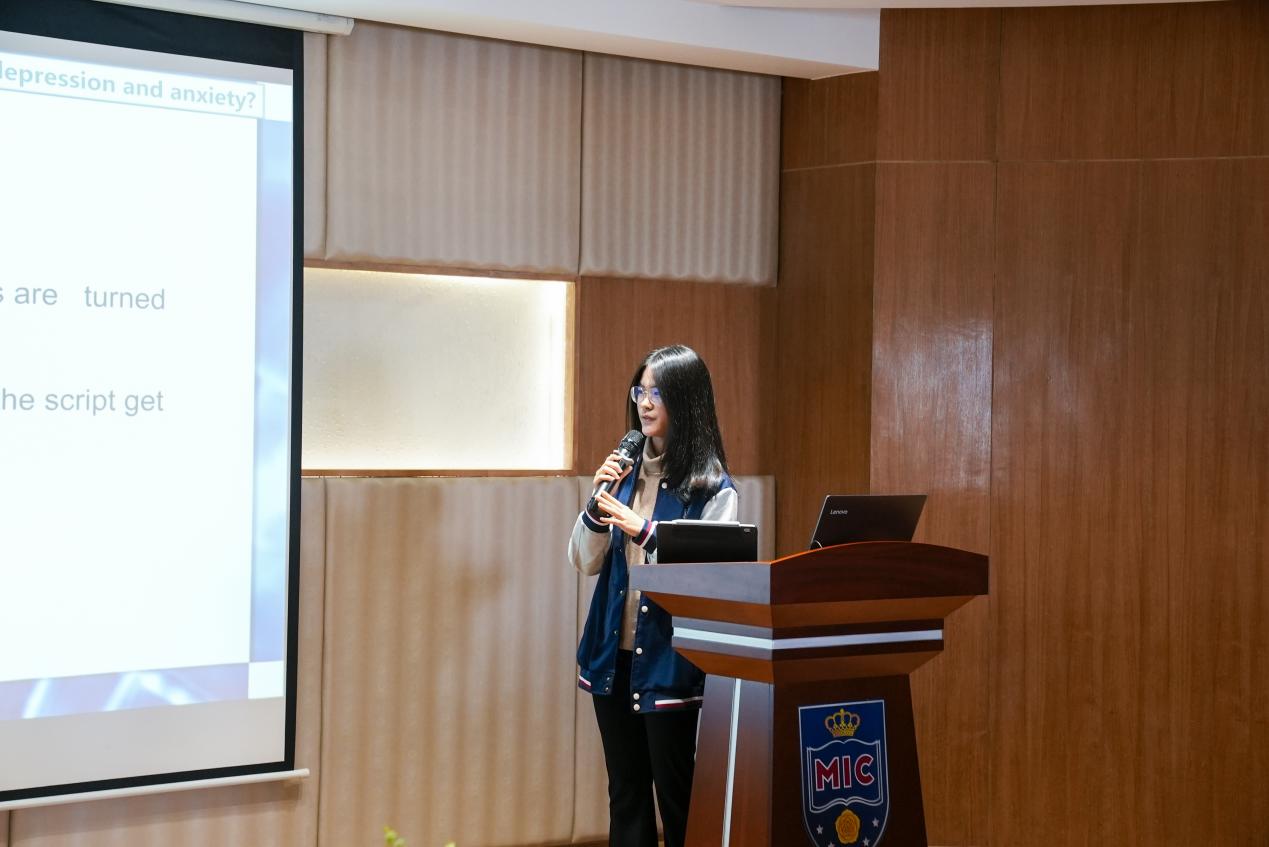
The most unforgettable moment came when a Cambridge professor and two PhD researchers visited our school. I stood alone on stage for the first time and delivered a fifteen-minute presentation and defence entirely in English. It was nerve-racking, but also exhilarating.
Academically, my project focused on whether lifestyle choices—diet, exercise, and art—could reverse epigenetic changes. As I delved into the literature, I noticed that most of them focused on isolating the effect of a single gene or factor, with every other variable carefully controlled. This approach produces precise and reliable results, but also makes me reflect on the gap between laboratory research and real life. In reality, no single approach works for everyone. Each individual responds differently, shaped by countless biological and environmental influences. Realising this complexity changed how I thought about my project. Instead of expecting straightforward answers, I learned to appreciate the limits of scientific models and the importance of asking broader questions.
Beyond insights and resilience, the project also helped me develop concrete skills. In the 4,000-word academic paper I wrote, I learned how to select, organise, and properly cite scholarly sources while structuring an argument for both written and oral communication. These are skills I know I will carry into university and beyond.
Ultimately, this project did not occupy a large portion of my personal statement as I had once imagined. Yet its influence on me was profound. It gave me persistence, independence, confidence, and a toolkit of academic skills I will continue to build upon. More importantly, it gave me a clearer lens on my interests.
Author : 黎栩彤 Jessie