
Recently, the UK Division of MIC (Majestic International College) "transplanted" its A-Level Art and Design classroom into the Foshan He Art Museum. This event serves as a microcosm of how MIC, through its systematic curriculum, formidable faculty, and distinct educational brand, constructs a bridge connecting students' current learning to their future creative achievements.
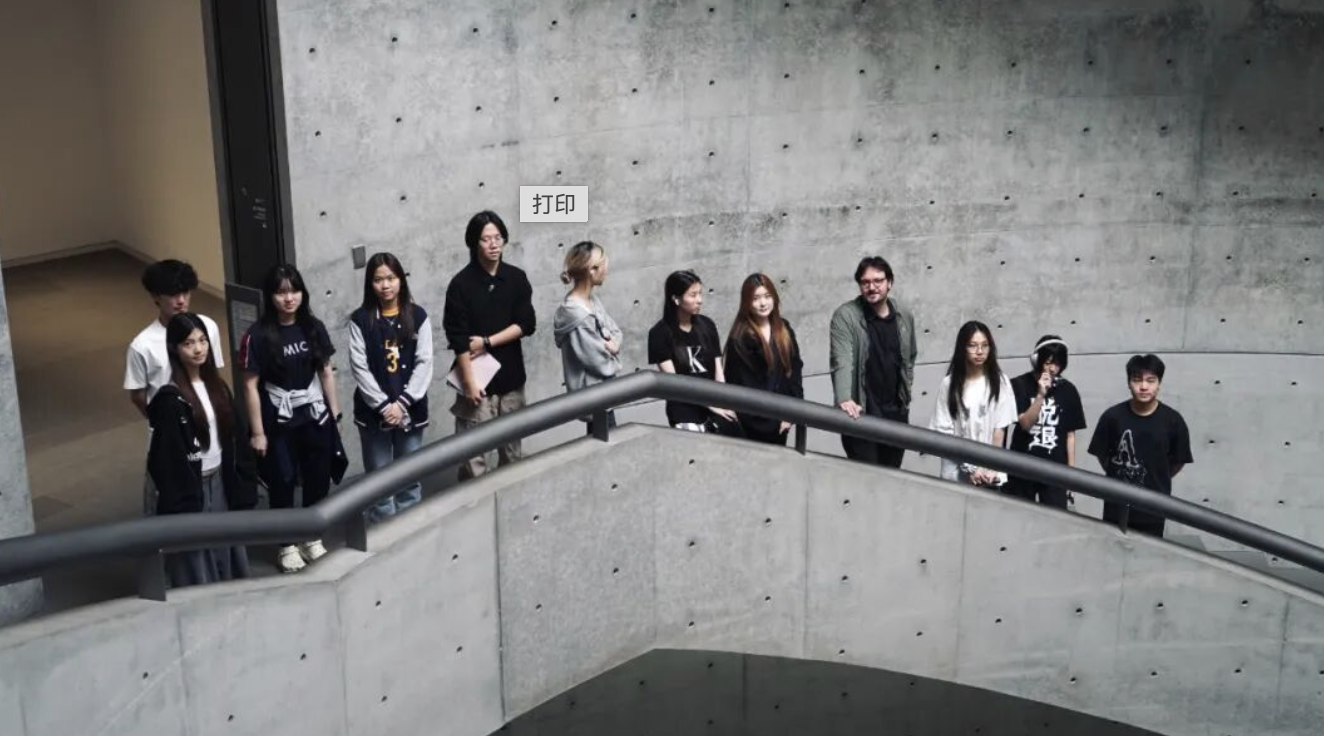 This activity was not merely a field trip but a fundamental component of the A-Level Art and Design curriculum. Its purpose was observation, documentation, and analysis within an authentic artistic setting, providing students with primary research material for their portfolios.
The A-Level Art and Design course emphasizes the integrity of the learning process over the completion of any single artwork. Student portfolios must demonstrate four key stages: Research, Experimentation, Recording, and Outcome. Therefore, engaging with exhibitions is an indispensable part of the course. Structured as a complete learning cycle, this session included pre-visit safety briefings, gallery tours, guided discussions, student documentation, and post-visit reflection.
Inside the galleries, students documented details and spatial relationships of artworks through photography, annotation, and note-taking. Their focus extended beyond what the artwork is to why it is presented in a particular way. Instructors facilitated this inquiry through questions rather than providing fixed answers: What feelings arise from viewing the work at a specific angle? How does materiality influence expression? Why did the artist choose this theme? This approach encourages students to develop their own interpretive perspectives rather than accepting a single narrative.
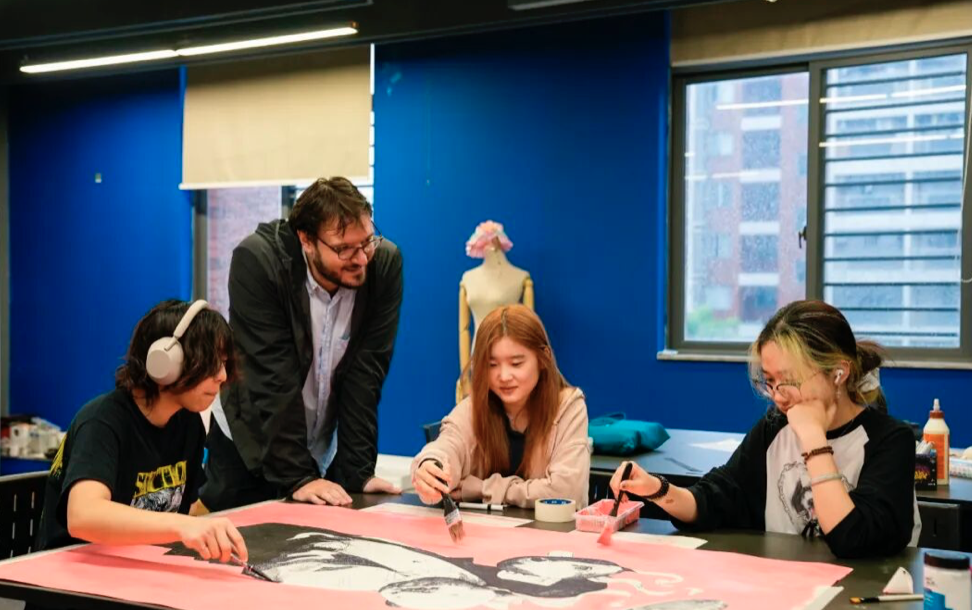
The visit centered on He Art Museum's fifth-anniversary international group exhibition, Roots Are More Aware Than a Compass of Direction. Using "roots" as a metaphor to explore growth, identity, and connection, the exhibition featured four sections. Artists from diverse global and cultural backgrounds expressed their understanding of the world through painting, installation, video, and multimedia. Additionally, the long-term display of Picasso's Man and Woman allowed students an irreplaceable, close-up encounter with the master's original brushwork and painterly language—an experience no photograph could provide.
MIC's art education is directed towards "cultivating independent creators with academic rigor." It prioritizes the completeness and critical nature of the creative process, strictly aligning with international curricula frameworks like A-Levels, and anchors instruction within the complete cycle of Research, Experimentation, Recording, and Outcome.
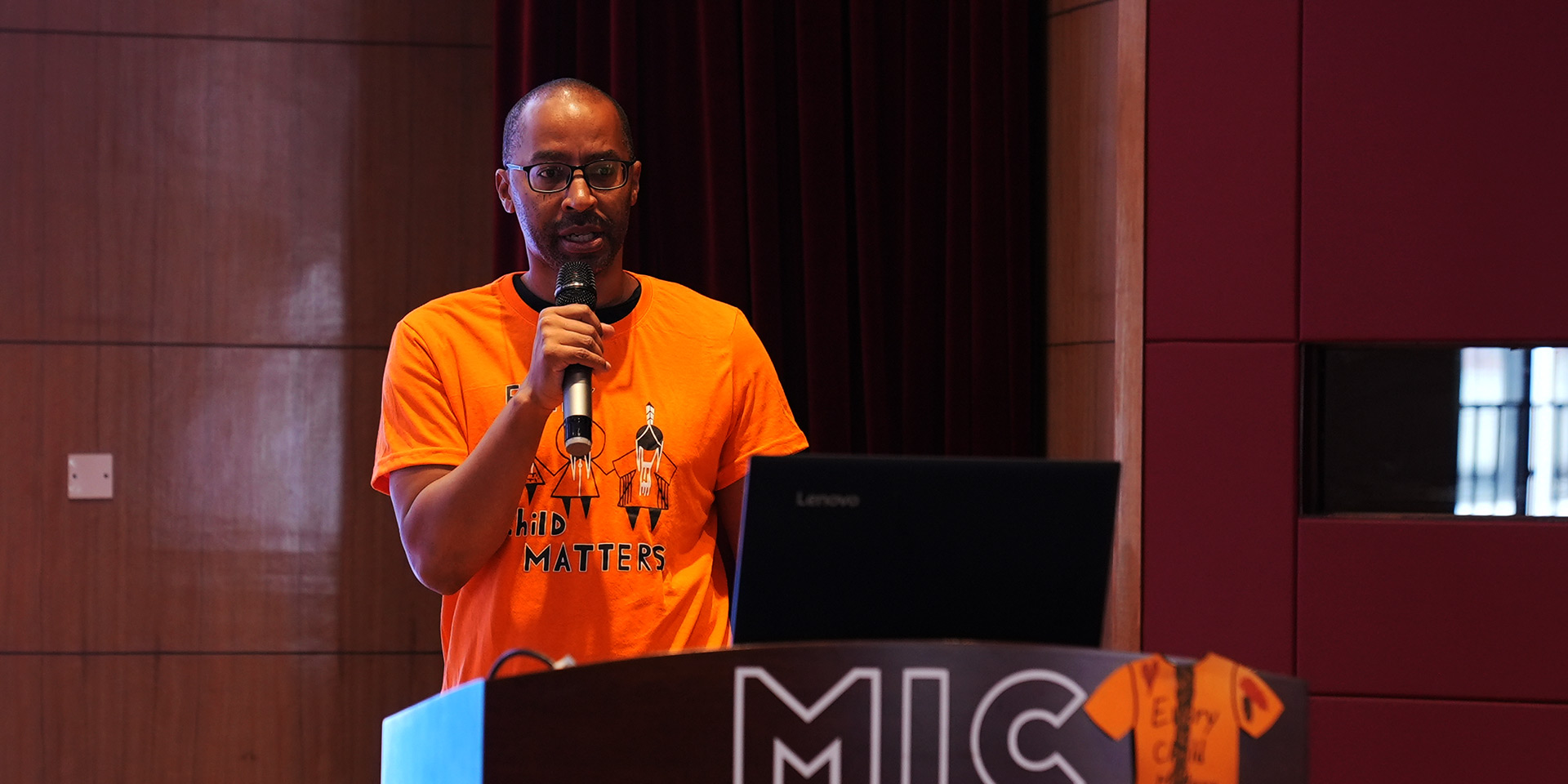
Mr. Mike, an Art tutor in the UK Division, excels at driving students to transcend personal creative boundaries through large-scale collaborative painting projects. His projects emphasize the fusion of visual languages and collective narrative, honing students' communication and leadership skills within a team-based creative environment.
Ms. Kelly specializes in the forefront of digital media and film production. Her curriculum deeply integrates creativity with technology, guiding students from lighting and photography, green-screen effects, to short film direction. Utilizing industry-standard tools and workflows, she empowers students to transform abstract concepts into high-quality audiovisual works, instilling strong technical execution and innovative confidence.
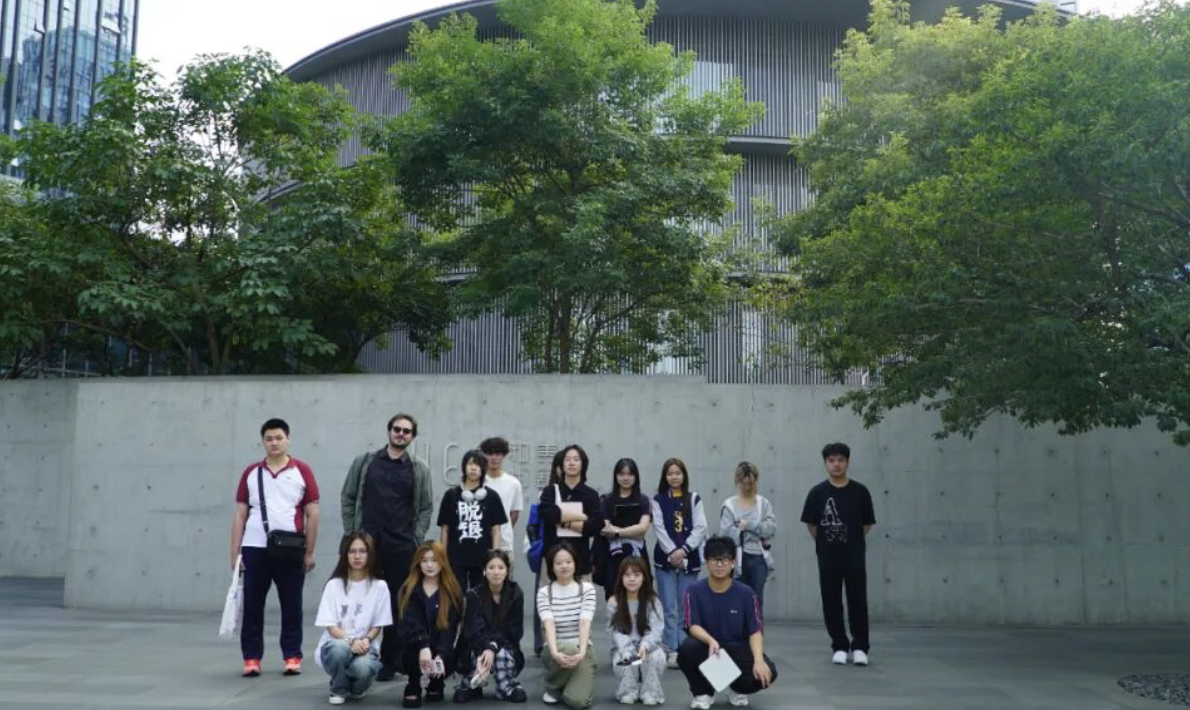
Leading this museum classroom experience, Mike and Kelly aimed for students to construct their own understanding before genuine artworks: art is not merely a practice of technique but a process of observation, critical thinking, self-expression, and self-discovery. Every student can find their unique perspective and way of understanding the world within it.
MIC's approach to art education is holistic. Courses such as "Media Arts 12" and "Film & TV 12 (Film Appreciation 12)" offered by the BC Division effectively complement the art courses in the UK Division. The BC curriculum emphasizes visual literacy and critical production in the digital age, where students use professional software like DaVinci Resolve to complete the full workflow from concept to final edit. This cross-divisional course structure provides students with a expansive platform to explore the intersection of traditional art and new media.
At MIC, learning art is a journey of deep academic and creative practice under the guidance of expert mentors. Through a tripartite educational model combining "Academic Research + Field Practice + Technological Integration," MIC ensures that every student not only masters sophisticated skills but also develops independent artistic viewpoints and sustainable creative capabilities.